
Makgadikgadi Pans National Park: Salt Flats, Meerkats, and Ancient Baobabs
Venture into the heart of Botswana and discover the Makgadikgadi Pans National Park, a landscape so vast and otherworldly it feels like stepping onto another planet. This immense expanse of salt pans, the remnants of a super-lake that once covered much of the Kalahari Desert, offers a truly unique and unforgettable safari experience.
An Ancient Landscape of Striking Contrasts
The Makgadikgadi Pans are among the largest salt flats in the world, stretching for thousands of square kilometres across northeastern Botswana. For most of the year, this area is a shimmering, arid wasteland, a stark white canvas under an immense blue sky. The sheer scale and silence are profound, offering a sense of isolation and wonder rarely found elsewhere.
These pans are the dried-up bed of Lake Makgadikgadi, which once covered an area larger than Switzerland, fed by ancient rivers, including the mighty Zambezi. Over millions of years, tectonic shifts and climate changes led to its desiccation, leaving behind the vast mineral-rich pans we see today.
The Annual Transformation: Dry vs. Wet Season
The Makgadikgadi Pans experience a dramatic transformation between the dry and wet seasons, each offering distinct opportunities for visitors.
- Dry Season (May to October):During these months, the pans are at their most parched, a cracked, lunar landscape stretching to the horizon. This is the ideal time for exhilarating quad bike safaris across the seemingly endless flats, offering a true sense of freedom and adventure. The lack of surface water means wildlife congregates around permanent water sources on the fringes of the pans.
- Wet Season (November to April):With the arrival of summer rains, the pans undergo a magical metamorphosis. Shallow sheets of water cover the surface, creating ephemeral wetlands that attract a staggering array of birdlife. This period also triggers one of Africa's lesser-known but equally spectacular wildlife events: the zebra and wildebeest migration.
Wildlife Encounters: Beyond the Big Five
While the Okavango Delta and Chobe National Park are famed for their megafauna, Makgadikgadi offers a different, equally compelling wildlife narrative, focusing on desert-adapted species and unique behaviors.
Charming Meerkats
One of the absolute highlights of a visit to Makgadikgadi is spending time with habituated meerkat colonies. These endearing creatures, often found in the grassy fringes of the pans, are incredibly entertaining. Visitors can observe their daily routines – foraging, playing, and standing sentinel – often getting remarkably close without disturbing them.
Fun Fact:Meerkats are highly social animals, living in groups called "mobs" or "gangs." They take turns acting as sentries, standing on their hind legs to watch for predators, letting out alarm calls if danger approaches.
The Zebra and Wildebeest Migration
During the wet season, the Makgadikgadi Pans become a crucial grazing ground for the second-largest zebra migration in Africa (after the Serengeti-Mara). Thousands of zebras, accompanied by wildebeest, converge here from the Boteti River area, drawn by the fresh grasses that emerge from the saline soil. This spectacle offers fantastic photographic opportunities and a chance to witness nature's resilience in a seemingly desolate environment.
Other Desert Dwellers and Birdlife
Beyond the meerkats and migratory herds, the park is home to a variety of fascinating creatures adapted to the harsh environment. Keep an eye out for brown hyenas, aardvarks, aardwolves, and various antelopes like springbok and gemsbok. Predators such as lions and cheetahs also follow the migrations. Birdlife is particularly abundant during the wet season, with flamingos arriving in their thousands to feed in the shallow saline waters, creating an unforgettable pink spectacle. Pelicans, ducks, and various waders also flock to the temporary wetlands.
Ancient Baobabs: Sentinels of the Pans
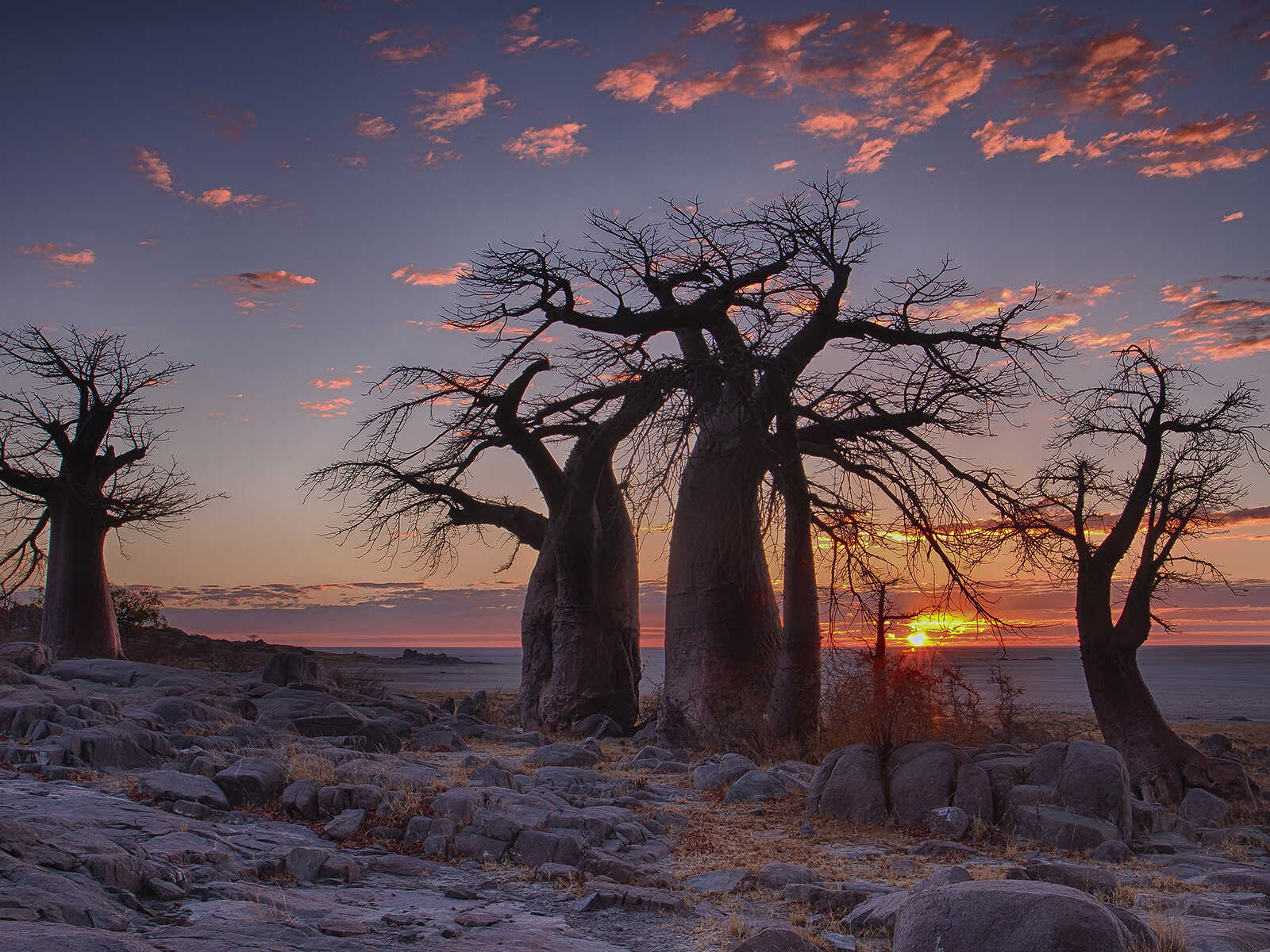
Scattered across the Makgadikgadi landscape are iconic baobab trees, some of them thousands of years old. These majestic "upside-down trees" stand as ancient sentinels, bearing witness to millennia of geological and climatic change. They hold significant cultural and historical importance for the local San people.
Kubu Island (Lekhubu Island)
One of the most famous baobab sites is Kubu Island (Lekhubu Island), a granite outcrop adorned with ancient baobabs, recognized as a National Monument. This crescent-shaped island, once a landmass within the ancient lake, offers breathtaking panoramic views of the pans and is steeped in spiritual significance. It's a perfect spot for photography, stargazing, and contemplating the vastness of time and nature.
Activities in Makgadikgadi Pans National Park
The park offers a range of unique activities that leverage its distinct landscape and wildlife.
- Quad Biking:Exhilarating rides across the dry pans (dry season only) provide an unparalleled sense of freedom and scale.
- Meerkat Encounters:Spend time observing habituated meerkat colonies, a truly heartwarming experience.
- Walking Safaris:Explore the fringes of the pans on foot, often accompanied by local San guides who share their deep knowledge of the desert ecosystem and their ancient culture.
- Stargazing:With minimal light pollution, the Makgadikgadi Pans offer some of the clearest and most spectacular stargazing opportunities on Earth. The Milky Way stretches vividly across the immense night sky.
- Cultural Experiences:Engage with local communities, learning about their traditional way of life and survival in this challenging environment.
- Game Drives:While less about "big five" checklists, game drives here focus on the unique desert-adapted wildlife and the spectacular migrations during the wet season.
Planning Your Visit: Practical Advice
Visiting the Makgadikgadi Pans National Park requires careful planning, especially if you intend to self-drive.
Best Time to Visit
- Dry Season (May - October):Ideal for quad biking, clear skies, excellent stargazing, and easier access across the pans. Wildlife viewing focuses on permanent water sources.
- Wet Season (November - April):Best for witnessing the zebra migration, flamingo breeding, and lush landscapes. Access can be challenging due to muddy conditions; 4x4 vehicles are essential.
Getting There and Accommodation
The park is accessible by 4x4 vehicle, and many visitors combine a trip here with other Botswana destinations like the Okavango Delta or Central Kalahari Game Reserve. There are various accommodation options ranging from luxury lodges on the fringes of the pans to designated campsites for self-drivers. It's advisable to book well in advance, especially during peak seasons.
What to Pack
Due to the remote nature of the area and extreme temperatures, essential items include:
- Lightweight, breathable clothing (layers are key).
- Wide-brimmed hat, sunglasses, and high-SPF sunscreen.
- Good walking shoes.
- Insect repellent, especially during the wet season.
- Camera with extra batteries and memory cards.
- Binoculars for wildlife viewing.
- Plenty of water and snacks, especially if self-driving.
- Warm layers for chilly evenings, even in summer.
Self-Drive vs. Guided Safari
While self-driving offers flexibility, navigating the pans can be challenging, particularly in the wet season. Road conditions can be unpredictable, and GPS signal can be unreliable. Many prefer guided safaris, where experienced guides handle logistics, navigation, and provide invaluable insights into the ecosystem and wildlife. If self-driving, ensure your vehicle is well-equipped, and you have ample supplies and recovery gear.
The Makgadikgadi Pans National Park is more than just a destination; it's an experience that challenges perceptions of a safari. It offers a profound connection to nature, a glimpse into ancient history, and encounters with unique wildlife, making it an essential addition to any Botswana itinerary.