
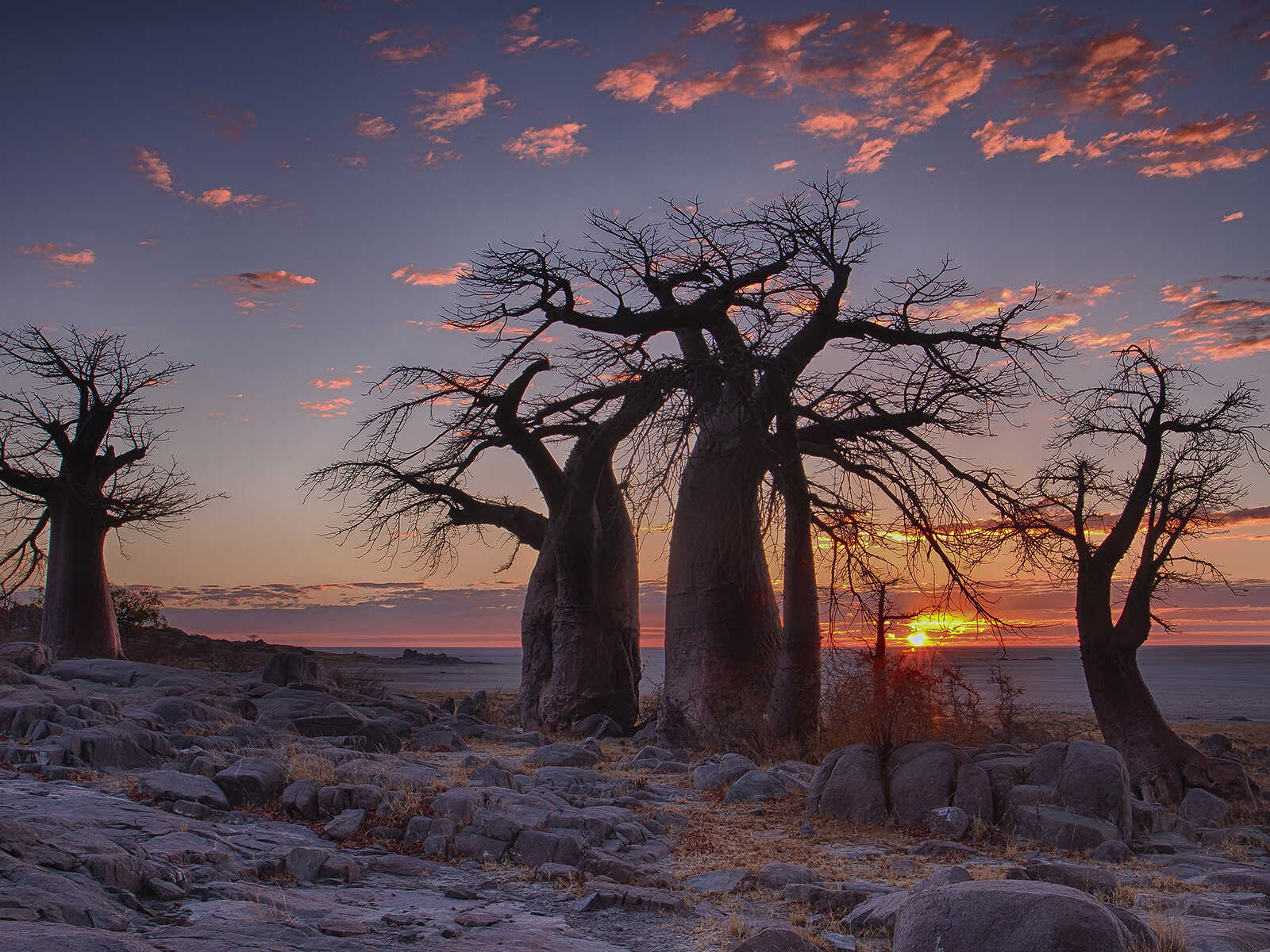
Botswana's Rich History: From Ancient Lands to Modern Nation
Botswana, a land of vast wilderness and vibrant culture, boasts a history as rich and diverse as its landscapes. From ancient hunter-gatherers leaving their mark on rock faces to a beacon of democratic stability in modern Africa, its journey is truly compelling. Understanding this past enriches any visit, offering deeper context to its stunning natural beauty and resilient people.Ancient Roots and Early Inhabitants
The story of Botswana begins tens of thousands of years ago, etched into the very stones of the land. Archaeological evidence points to early human presence dating back to the Stone Age, making this region one of the cradles of humanity. The earliest known inhabitants were the ancestors of the San people, often referred to as Bushmen, who have lived in harmony with the harsh but beautiful Kalahari Desert for millennia.
These nomadic hunter-gatherers left behind an incredible legacy of rock art, a silent testimony to their spiritual beliefs and daily lives. The most significant of these sites is Tsodilo Hills, a UNESCO World Heritage site often called the "Louvre of the Desert." With over 4,500 rock paintings spanning thousands of years, it offers an unparalleled window into the ancient past of Southern Africa.
Around 2,000 years ago, Bantu-speaking groups began migrating into the region, bringing with them agricultural practices, ironworking, and new social structures. These groups gradually introduced livestock farming and settled communities, transforming the landscape and economy. Early Iron Age sites across Botswana reveal sophisticated societies that thrived on farming, trade, and intricate social organization.
The Rise of Kingdoms and Tribal Structures
By the 13th and 14th centuries, the ancestors of the Tswana people, who form the majority of Botswana's population today, started to settle in the area. They established powerful chiefdoms, ordikgosi, which developed complex political and social systems. These chiefdoms were characterized by a centralized authority under a hereditary chief, supported by a system of village headmen and public assemblies (kgotla).
Key Tswana tribes like the Bamangwato, Bakwena, Bangwaketse, and Batawana emerged, each with their distinct territories and traditions. Their societies were built on cattle wealth, strong community bonds, and intricate legal systems. Thekgotla, a traditional meeting place, served as both a court and a forum for public discussion, laying the groundwork for Botswana's future democratic values.
The 19th century brought significant upheaval with theDifaqane, a period of widespread warfare and migration in Southern Africa. Tswana chiefdoms faced pressures from encroaching Ndebele warriors from the north and expanding Boer trekkers from the south. This era led to consolidation among the Tswana, as they formed alliances and sought protection to preserve their lands and way of life.
Colonial Era: The Bechuanaland Protectorate
As European powers scrambled for control of Africa, the Tswana chiefs found themselves caught between competing interests. Missionaries, most notably David Livingstone, had already established a presence, and their reports sparked further European interest. The Tswana leaders, recognizing the existential threat posed by land-hungry Boer settlers and Ndebele raids, made a strategic decision.
In 1885, three prominent Tswana chiefs – Khama III of the Bamangwato, Sebele I of the Bakwena, and Bathoen I of the Bangwaketse – travelled to Great Britain to petition Queen Victoria for protection. Their diplomatic efforts were successful, leading to the establishment of the Bechuanaland Protectorate. This move prevented the territory from being absorbed into Rhodesia (modern-day Zimbabwe) or the Union of South Africa.
The journey of Chiefs Khama III, Sebele I, and Bathoen I to England in 1895 was a pivotal moment. Their articulate and dignified appeal to Queen Victoria highlighted the Tswana people's desire for self-determination and protection, fundamentally shaping the future borders and identity of Botswana.
Under British protection, Bechuanaland largely retained its traditional Tswana administrative structures through indirect rule. Unlike many other colonies, it was seen primarily as a strategic buffer zone, and direct colonial exploitation was limited. This unique colonial experience meant that the Tswana chiefs maintained significant authority, and land ownership largely remained with the indigenous people, laying a crucial foundation for post-independence stability.
Path to Independence
The mid-20th century saw a growing tide of nationalism across Africa. In Bechuanaland, the movement for independence gained momentum, spearheaded by figures like Seretse Khama. Educated in South Africa and the United Kingdom, Khama returned to lead the Bechuanaland Democratic Party (BDP), advocating for self-governance and a unified, democratic nation.
Seretse Khama's leadership was instrumental. Despite facing personal and political challenges, including opposition from both British and South African authorities due to his marriage to a white British woman, he galvanized support for independence. The transition was remarkably peaceful and well-managed, a testament to the strong foundations laid during the protectorate era and the pragmatic leadership of the Tswana chiefs.
In 1965, Bechuanaland achieved self-governance, and on September 30, 1966, it became the independent Republic of Botswana, with Seretse Khama as its first President. The new nation adopted a multi-party democratic system, a commitment to human rights, and a development strategy focused on sustainable growth.
Modern Botswana: A Success Story
Botswana's post-independence story is often hailed as one of Africa's most remarkable success stories. Shortly after independence, vast diamond deposits were discovered, transforming the nation's economic prospects. However, unlike many resource-rich countries, Botswana managed its wealth prudently, investing in infrastructure, education, and healthcare.
The government's commitment to good governance, low corruption, and sound economic policies ensured that diamond revenues benefited the entire population. This stability allowed Botswana to become a shining example of democracy and economic growth in Africa. It has consistently maintained a multi-party system, free and fair elections, and a strong rule of law.
Beyond diamonds, Botswana has also become a global leader in conservation. Recognizing the immense value of its natural heritage, vast swathes of land have been set aside for national parks and game reserves. Iconic destinations like the Okavango Delta,Chobe National Park,Central Kalahari Game Reserve,Moremi Game Reserve, and Makgadikgadi Pans National Park are testaments to this commitment. Ecotourism has become a vital component of the economy, providing sustainable livelihoods and protecting biodiversity.
Today, Botswana continues to balance economic development with environmental protection and social progress. While challenges remain, its journey from ancient lands shaped by nomadic San to a prosperous and democratic modern nation is an inspiring testament to its people's resilience, wisdom, and foresight.
Experiencing Botswana's History Today
Visitors to Botswana can directly connect with this rich history. Explore the ancient rock art and spiritual significance of Tsodilo Hills. Learn about San culture through guided walks in the Kalahari Desert. Visit museums in Gaborone and other towns that showcase the nation's journey.
Engage with local communities to understand traditional Tswana life and the enduring legacy of thekgotla. Witness the natural landscapes that have sustained generations, from the delta's abundance to the desert's stark beauty. Botswana's history is not just in books; it's woven into its landscapes, its wildlife, and the warm welcome of its people, offering a profound and memorable travel experience.