
Best Time to Visit Bosnia and Herzegovina for Every Traveler
Bosnia and Herzegovina, a country where East meets West, offers a captivating blend of natural beauty, rich history, and vibrant culture. Deciding when to visit this Balkan gem largely depends on your interests, as each season unveils a distinct charm and a unique set of activities.
From the sun-drenched streets of Mostar to the snowy peaks surrounding Sarajevo, understanding the seasonal variations is key to planning your perfect trip to Bosnia and Herzegovina.
Understanding Bosnia and Herzegovina's Climate
Bosnia and Herzegovina experiences a diverse climate due to its varied topography. The northern parts and central mountainous regions have a continental climate, characterized by warm summers and cold, snowy winters. Towards the south, particularly in Herzegovina, the climate transitions to a Mediterranean influence, bringing hot, dry summers and mild, rainy winters. This climatic diversity means that while one region might be ideal for skiing, another could be perfect for sightseeing.
Spring (March - May): Rebirth and Mild Beauty
Spring in Bosnia and Herzegovina is a season of gentle awakening, offering a refreshing escape before the peak summer crowds arrive. The landscapes transform into lush greenery, and the air becomes crisp and invigorating.
Weather Overview
Temperatures gradually rise from cool to mild, typically ranging from 8°C to 20°C (46°F to 68°F). While sunshine becomes more frequent, spring showers are common, especially in March and April. May generally offers the most stable and pleasant spring weather.
Ideal for
- Sightseeing:Comfortable temperatures make it perfect for exploring historic cities like Sarajevo, wandering through the ancient streets of Baščaršija, or marveling at the iconic Old Bridge in Mostar. The dervish house at Blagaj tekija is particularly serene in spring.
- Hiking:Lower and mid-altitude trails become accessible and are adorned with wildflowers. While higher mountain trails might still have residual snow, areas like the lower reaches of Sutjeska National Park offer excellent opportunities for scenic walks.
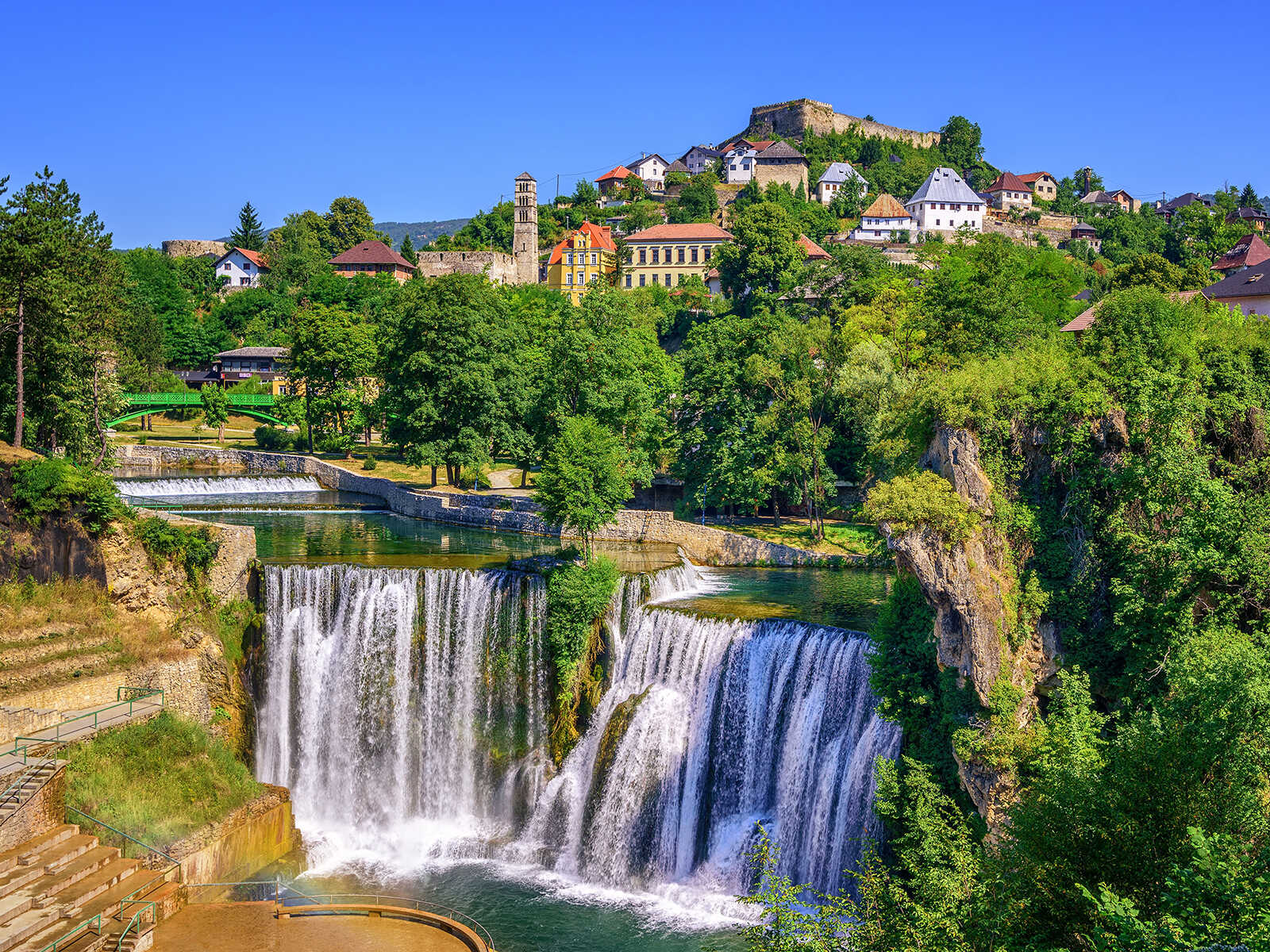
- Waterfalls:Rivers swell with snowmelt, making waterfalls like Kravice Waterfalls and Pliva Waterfall particularly impressive with their powerful flow.
Pros
- Fewer crowds mean a more intimate experience at popular attractions.
- Lush, vibrant landscapes and blooming flora.
- Comfortable temperatures for walking and outdoor activities.
Cons
- Unpredictable rain can occur, especially in early spring.
- Some higher-altitude hiking trails may still be inaccessible due to snow.
Summer (June - August): Vibrant and Sunny Adventures
Summer is the peak tourist season in Bosnia and Herzegovina, bringing warm, sunny weather and a lively atmosphere, especially in the cities and popular natural attractions.
Weather Overview
Expect hot temperatures, especially in Herzegovina, where they can frequently exceed 30°C (86°F). Northern and central regions, including Sarajevo, also experience warm summers, though nights can be cooler. Mountainous areas offer a refreshing escape with milder temperatures.
Ideal for
- Outdoor Activities:This is prime time for rafting on the Una River in Una National Park, canyoning, mountain biking, and exploring the country's extensive hiking trails at all altitudes.
- City Exploration:Cities buzz with activity, outdoor cafes are full, and evenings are perfect for strolling. Seek shade at places like Vrelo Bosne for its cool springs.
- Festivals:Many cultural and music festivals take place, adding to the vibrant energy.
- Water Activities:Swimming in rivers, lakes, and under waterfalls like Kravice Waterfalls is a popular way to cool down.
Pros
- Best weather for most outdoor and water-based activities.
- Long daylight hours for extended exploration.
- Lively atmosphere with numerous events and festivals.
Cons
- Peak tourist season means larger crowds and higher demand for accommodation.
- Can be very hot, especially in Herzegovina and urban areas, requiring careful planning to avoid midday sun.
Autumn (September - November): Golden Hues and Tranquil Exploration
Autumn paints Bosnia and Herzegovina in stunning shades of gold, amber, and crimson. It’s a favorite time for many travelers seeking a balance of good weather, fewer crowds, and breathtaking scenery.
Weather Overview
Temperatures gradually cool from warm in September to crisp in November, typically ranging from 5°C to 25°C (41°F to 77°F). September and early October offer stable, pleasant weather, while late October and November see increasing rainfall and cooler temperatures, with the possibility of early snow in the mountains.
Ideal for
- Photography:The autumn foliage provides spectacular backdrops for photographers, especially in the national parks and along river valleys.
- Cultural Exploration:Comfortable temperatures make it ideal for exploring historical sites like the Mehmed Paša Sokolović Bridge in Višegrad or the Sarajevo Tunnel of Hope, without the summer heat or crowds.
- Wine Tasting:Herzegovina's wine regions are particularly inviting in autumn, following the grape harvest.
- Gentle Hiking:Many trails remain accessible, offering stunning views amidst the changing leaves.
Pros
- Stunning natural beauty with vibrant autumn colors.
- Fewer tourists than in summer, leading to a more relaxed experience.
- Comfortable temperatures for a wide range of activities.
Cons
- Shorter daylight hours compared to summer.
- Weather can become unpredictable later in the season, with increased chances of rain or early snow in higher elevations.
- Some tourist services might begin to reduce hours towards late autumn.
Travel Tip:Early October is often considered a sweet spot for visiting Bosnia and Herzegovina, combining pleasant weather with magnificent fall colors and significantly reduced crowds.
Winter (December - February): A Snowy Wonderland
Winter transforms much of Bosnia and Herzegovina into a picturesque, snow-covered landscape, particularly appealing to winter sports enthusiasts and those seeking a cozy, festive atmosphere.
Weather Overview
Winters are cold, with temperatures frequently dropping below freezing, especially in the mountainous regions. Snowfall is common and can be heavy, blanketing the landscape. Herzegovina experiences milder, wetter winters, though snow is not uncommon in higher parts.
Ideal for
- Skiing and Snowboarding:Bosnia and Herzegovina boasts excellent, affordable ski resorts, notably Jahorina and Bjelašnica, which hosted the 1984 Winter Olympics.
- Cozy City Breaks:Enjoy the festive atmosphere of cities like Sarajevo, with Christmas markets, warm cafes, and hearty traditional cuisine.
- Winter Photography:The snow-covered landscapes offer unique and beautiful photographic opportunities.
Pros
- Excellent conditions for winter sports.
- Magical, snow-covered scenery, especially in the mountains and historic towns.
- A unique cultural experience, enjoying local hospitality indoors.
Cons
- Very cold temperatures can limit some outdoor activities.
- Some roads, especially to remote areas, may be challenging due to snow.
- Certain natural attractions might be less accessible or impressive under heavy snow.
Best Time for Specific Interests
Budget Travelers
Theshoulder seasons (late spring: May, and early autumn: September/October)generally offer the best value. Accommodation and flight prices tend to be lower than in peak summer, and you can still enjoy pleasant weather and fewer crowds.
Outdoor Enthusiasts
- Hiking and Rafting:Summer (June-August)is prime for high-altitude trekking and water sports.
- Skiing:Winter (December-February), particularly January and February, offers the best snow conditions.
- Gentle Walks and Cycling:Spring (April-May)andAutumn (September-October)provide comfortable temperatures.
Cultural Explorers
Spring (April-May)andAutumn (September-October)are ideal. The mild weather makes exploring historical sites, museums, and city streets a pleasure, and the crowds are more manageable than in summer.
Photography Buffs
Each season offers unique beauty:Autumn (October)for vibrant foliage,Winter (January-February)for snowy landscapes, andSpring (April-May)for lush greenery and blooming flowers.
Avoiding Crowds
For a more tranquil experience, aim for theshoulder seasons (April-May and September-October). You'll still enjoy good weather but with fewer tourists at popular spots.
Practical Tips for Planning Your Visit
- Check Local Holidays and Events:Public holidays and religious festivals can impact opening hours and transportation.
- Pack Layers:Regardless of the season, dressing in layers is always a good strategy, especially when exploring mountainous regions where weather can change rapidly.
- Book Ahead for Peak Season:If traveling in summer or during popular ski season, secure your accommodation and essential tours well in advance.
- Consider Travel Insurance:Always a good idea, especially if you plan on participating in outdoor activities.
Conclusion
Bosnia and Herzegovina truly offers something for every traveler, regardless of the season. Whether you dream of exhilarating winter sports, serene spring hikes, vibrant summer festivals, or the golden tranquility of autumn, this resilient and beautiful country is ready to welcome you. By aligning your travel dates with your interests, you're sure to create unforgettable memories in the heart of the Balkans.