
Essential Belgian Phrases: Key French & Dutch for Your Trip
Embarking on a Belgian adventure promises stunning architecture, delicious cuisine, and a rich tapestry of culture. To truly immerse yourself and connect with locals, understanding a few basic French and Dutch phrases will elevate your experience from good to unforgettable.
A Tale of Two Tongues: Belgium's Linguistic Landscape
Belgium is a fascinating country with three official languages: Dutch, French, and German. For most travellers, the focus will be on Dutch and French, reflecting the country's main linguistic divide. The northern region of Flanders primarily speaks Dutch, while the southern region of Wallonia is predominantly French-speaking. The capital, Brussels, is officially bilingual (French and Dutch), though French is more widely spoken in daily life.
While English is commonly understood in tourist areas, especially by younger generations and in hospitality, making an effort to speak a few words in the local language is always appreciated. It shows respect for the culture and can often lead to warmer interactions and more authentic experiences.
Fun Fact:The linguistic border in Belgium is remarkably sharp. You can often cross from a Dutch-speaking town to a French-speaking one with distinct differences in street names and signage almost immediately.
French Phrases for Wallonia and Brussels
French is the official language in Wallonia, covering areas like the Ardennes Hills and cities such as Liège, Namur, and Dinant, home to the impressive Notre Dame de Dinant. It's also widely spoken throughout Brussels, including around the iconic Grand Place. Here are some essential phrases:
Basic Greetings & Politeness
- Bonjour(bon-ZHOOR): Hello / Good day
- Bonsoir(bon-SWAR): Good evening
- Salut(sa-LOO): Hi (informal)
- Au revoir(o ruh-VWAR): Goodbye
- S'il vous plaît(seel voo PLEH): Please (formal)
- S'il te plaît(seel tuh PLEH): Please (informal)
- Merci(mer-SEE): Thank you
- De rien(duh ree-EN): You're welcome
- Excusez-moi(ex-koo-zay MWAH): Excuse me / Pardon me
- Désolé(e)(day-zo-LAY): Sorry
- Oui(wee): Yes
- Non(non): No
Getting Around
- Où est...?(oo EH): Where is...?
- Comment puis-je aller à...?(koh-MAHN pwee zh AL-ay ah): How can I get to...?
- À gauche(ah GOHSH): Left
- À droite(ah DRWAHT): Right
- Tout droit(too DRWAH): Straight ahead
- La gare(la GAR): The train station
- L'arrêt de bus(luh-reh duh BOOS): The bus stop
- Un taxi, s'il vous plaît.(uhn TAK-see, seel voo PLEH): A taxi, please.
- Example:"Où est le Château de Durbuy?" (Where is Durbuy Castle?)
Dining Out
- La carte / Le menu(la KART / luh muh-NOO): The menu
- Une table pour deux, s'il vous plaît.(oon TAB-luh poor duh, seel voo PLEH): A table for two, please.
- De l'eau, s'il vous plaît.(duh LOH, seel voo PLEH): Water, please.
- L'addition, s'il vous plaît.(la-dee-SYON, seel voo PLEH): The bill, please.
- C'est délicieux!(seh day-lee-SYOO): It's delicious!
- Je voudrais...(zhuh voo-DRAY): I would like...
Shopping
- Combien ça coûte?(kom-bee-EN sa KOOT): How much does it cost?
- Je voudrais acheter ça.(zhuh voo-DRAY ash-TAY sa): I would like to buy this.
- Vous avez...?(voo za-VAY): Do you have...?
Emergencies & Assistance
- Au secours!(oh suh-KOOR): Help!
- J'ai besoin d'un médecin.(zhay buh-ZWAN duh uhn med-SAN): I need a doctor.
- Je ne comprends pas.(zhuh nuh kom-PRAN pah): I don't understand.
- Parlez-vous anglais?(par-LAY voo an-GLEH): Do you speak English?
Dutch Phrases for Flanders and Brussels
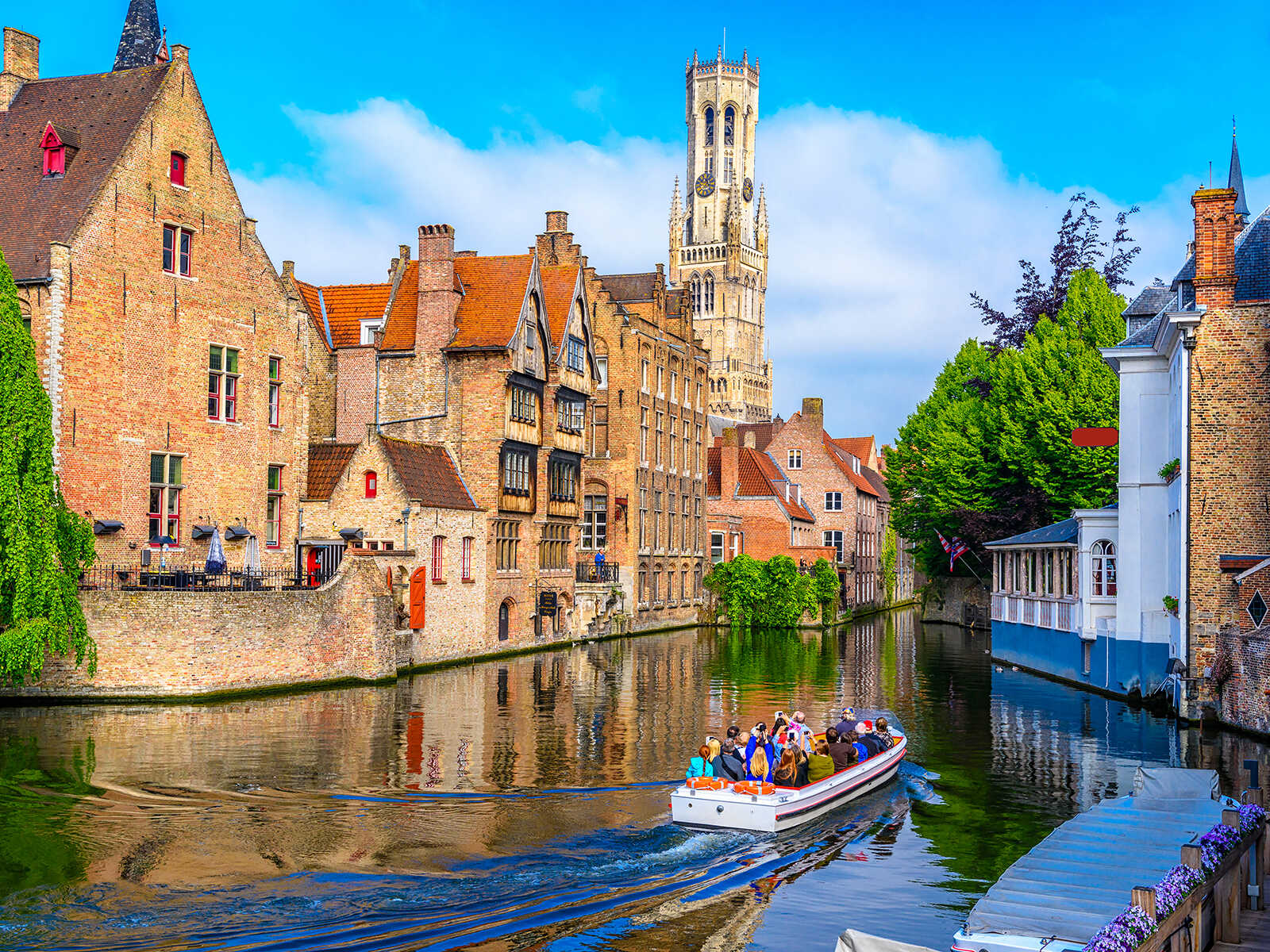
Dutch is the official language in Flanders, encompassing popular destinations like Bruges with its enchanting Canals of Bruges, Ghent's vibrant historic town centre, and the coastal towns such as Knokke-Heist beaches. It's also widely understood and used in Brussels, especially in areas bordering Flanders like parts of the Sonian Forest and towards the Hallerbos Forest. Here are some key phrases:
Basic Greetings & Politeness
- Hallo(HAH-lo): Hello
- Goedendag(KHOO-duh-n-dakh): Good day
- Goedenavond(KHOO-duh-n-ah-vont): Good evening
- Dag(DAKH): Hi / Bye (informal)
- Tot ziens(tot ZEENS): Goodbye
- Alstublieft(ALS-too-bleeft): Please (formal)
- Alsjeblieft(ALS-yuh-bleeft): Please (informal)
- Dank u wel(DANK oo VEL): Thank you (formal)
- Dank je wel(DANK yuh VEL): Thank you (informal)
- Graag gedaan(KHRAK khuh-DAHN): You're welcome
- Pardon(par-DON): Excuse me / Pardon me
- Sorry(SO-ree): Sorry
- Ja(yah): Yes
- Nee(nay): No
Getting Around
- Waar is...?(vaar IS): Where is...?
- Hoe kom ik bij...?(hoo KOM ik bay): How do I get to...?
- Links(links): Left
- Rechts(rekhts): Right
- Rechtdoor(rekht-DOOR): Straight ahead
- Het station(hut sta-SHON): The train station
- De bushalte(duh BUS-hal-tuh): The bus stop
- Een taxi, alstublieft.(uhn TAK-see, ALS-too-bleeft): A taxi, please.
- Example:"Waar is de Grote Markt?" (Where is the Grote Markt?)
Dining Out
- De menukaart(duh muh-NOO-kart): The menu
- Een tafel voor twee, alstublieft.(uhn TAH-fuhl vor TWAY, ALS-too-bleeft): A table for two, please.
- Water, alstublieft.(VAH-tur, ALS-too-bleeft): Water, please.
- De rekening, alstublieft.(duh RAY-kuh-ning, ALS-too-bleeft): The bill, please.
- Het is heerlijk!(hut is HAYR-luk): It's delicious!
- Ik wil graag...(ik vil KHRAKH): I would like...
Shopping
- Hoeveel kost dit?(HOO-veel kost dit): How much does this cost?
- Ik wil dit kopen.(ik vil dit KO-puhn): I want to buy this.
- Heeft u...?(hayft oo): Do you have...?
Emergencies & Assistance
- Help!(HELP): Help!
- Ik heb een dokter nodig.(ik hep uhn DOK-tur NO-dukh): I need a doctor.
- Ik begrijp het niet.(ik buh-KHREIP hut neet): I don't understand.
- Spreekt u Engels?(spreykt oo ENG-uls): Do you speak English?
Pronunciation Tips and Cultural Nuances
Don't be intimidated by pronunciation. Belgian French has subtle differences from Parisian French, and Belgian Dutch (often called Flemish) has its own distinct accent and some vocabulary variations compared to standard Dutch from the Netherlands. However, these differences are minor for a beginner, and your efforts will be met with appreciation.
One important cultural note: both French and Dutch have formal ("vous" / "u") and informal ("tu" / "je") ways of addressing people. When speaking to strangers, shopkeepers, or anyone older than you, it's always safer and more polite to use the formal address. If they switch to the informal with you, it's an invitation to do the same.
Tip:Many Belgians, especially in Brussels, are proficient in both French and Dutch. If you're unsure which language to use, start with "Bonjour" or "Hallo" and listen for cues. Often, the person will respond in the language they prefer or are more comfortable speaking.
Embrace the Challenge!
Learning a few phrases before your trip to Belgium isn't just about navigating transactions; it's about enriching your journey. It opens doors to genuine interactions, helps you appreciate the local culture more deeply, and shows respect for the people you meet. Whether you're ordering a delicious Belgian waffle, asking directions to the Groot Begijnhof in Leuven, or simply saying "thank you," your efforts will be rewarded.
So, arm yourself with these essential phrases, a spirit of adventure, and get ready to experience the linguistic charm of Belgium. Your trip will be all the more memorable for it!