
A Brief History of Belarus for Visitors
Often overlooked, Belarus possesses a profound and complex history, shaped by its strategic position at the crossroads of empires. Understanding this rich past is essential for any visitor seeking to truly appreciate the country's resilient spirit, cultural depth, and the poignant stories etched into its landscapes and cities.
Early Beginnings: Slavic Tribes and Kievan Rus'
The lands that today comprise Belarus were first settled by various East Slavic tribes, including the Dregovichians, Krivichians, and Radimichians, as early as the 6th century AD. These groups established early settlements and developed distinct cultural identities, laying the groundwork for future statehood. By the 9th and 10th centuries, the region came under the cultural and political influence of Kievan Rus', a powerful medieval state centered around Kyiv.
During this period, influential principalities emerged, such as Polotsk and Turov. The Principality of Polotsk, in particular, grew into a significant independent entity, maintaining its own dynastic line and often challenging the dominance of Kyiv. Its strategic location on trade routes connecting the Baltic and Black Seas fostered its economic and cultural development, leaving behind early architectural and literary monuments.
The Grand Duchy of Lithuania: A Golden Age
The 13th and 14th centuries marked a pivotal era for Belarusian lands with the rise of the Grand Duchy of Lithuania. This vast medieval state, initially pagan, expanded rapidly, incorporating much of modern-day Belarus, Ukraine, and parts of Russia. Belarusian lands formed the cultural and economic heart of the Grand Duchy, and Old Belarusian (also known as Ruthenian) became the official state language, used in administration, law, and literature.
This period is often considered a golden age for Belarusian culture and state-building. The Statutes of Lithuania, a comprehensive code of laws written in Old Belarusian, are a testament to the sophisticated legal system developed during this time. Magnates like the Radziwill family constructed magnificent estates and castles, such as the UNESCO-listed Nesvizh Castle, which stands today as a symbol of this era's grandeur. In 1569, the Grand Duchy of Lithuania united with the Kingdom of Poland to form the Polish-Lithuanian Commonwealth, a powerful elective monarchy that stretched across Central and Eastern Europe.
Did you know?The Belarusian language, sometimes referred to as Ruthenian, was the official language of the Grand Duchy of Lithuania for centuries, predating modern Polish and Russian as a state language in the region.
Partitions and Russian Rule
The prosperity of the Commonwealth eventually waned due to internal strife and external pressures. In the late 18th century, a series of three partitions (1772, 1793, 1795) orchestrated by the Russian Empire, Prussia, and Austria led to the complete dissolution of the Polish-Lithuanian Commonwealth. The vast majority of Belarusian territories were absorbed into the Russian Empire.
Under Russian rule, Belarusian lands became known as the "North-Western Krai." The imperial government pursued policies of Russification, suppressing the Belarusian language and culture, and promoting Russian as the dominant language and identity. Despite these efforts, a nascent Belarusian national consciousness began to emerge in the 19th century, championed by intellectuals and poets who sought to preserve and revive their distinct heritage. The 1812 invasion by Napoleon briefly brought French influence, but Russian control was swiftly re-established.
The Tumultuous 20th Century
World War I and the Belarusian National Republic
The early 20th century brought immense upheaval. World War I saw Belarusian territory become a major battlefield, leading to widespread destruction and suffering. Following the Russian Revolution of 1917, and amidst the chaos of the collapsing Russian Empire and German occupation, the Belarusian National Republic (BNR) was declared on March 25, 1918. However, its existence was short-lived and lacked international recognition, quickly falling under Soviet and then Polish influence.
Soviet Belarus
In 1919, the Belarusian Soviet Socialist Republic (BSSR) was established, becoming one of the founding republics of the Soviet Union in 1922. The interwar period saw significant industrialization and collectivization, transforming Belarus from an agrarian society. However, these decades were also marked by political purges and repressions under Stalin's regime, which deeply impacted Belarusian intelligentsia and society.
The Devastation of World War II (The Great Patriotic War)
No period in Belarusian history is as impactful as World War II, known as the Great Patriotic War. On June 22, 1941, Nazi Germany launched a brutal invasion of the Soviet Union, with Belarus bearing the brunt of the initial attack. The Memorial Complex Brest Hero stands as a testament to the fierce resistance at the Brest Fortress, an early symbol of Soviet defiance.
Belarus endured three years of brutal occupation, suffering catastrophic losses. An estimated one in three residents perished, cities were razed, and countless villages, like the one commemorated at the solemn Khatyn Memorial Complex, were burned to the ground with their inhabitants. The partisan movement in Belarus was one of the largest and most effective in occupied Europe, playing a crucial role in disrupting German operations. The archaeological site at the Berestye Archeological Museum in Brest also offers a glimpse into the earlier history of this strategically vital city.
Post-War Recovery and Chernobyl
After the war, Belarus faced the monumental task of rebuilding. With considerable effort and aid from the Soviet Union, cities, industries, and agriculture were painstakingly restored. A symbol of this resilience and post-war unity is the Mound of Glory, a memorial commemorating Soviet soldiers. However, another tragedy struck in 1986 with the Chernobyl nuclear disaster. While the plant was located in neighboring Ukraine, Belarus received about 70% of the radioactive fallout, leading to long-term environmental and health consequences, particularly in its southern regions.
Independent Belarus: A New Chapter
The late 1980s saw growing calls for reform across the Soviet Union. As the USSR disintegrated, Belarus declared its sovereignty in 1990 and gained full independence on August 25, 1991. This marked the beginning of a new chapter, allowing Belarus to forge its own path on the global stage.
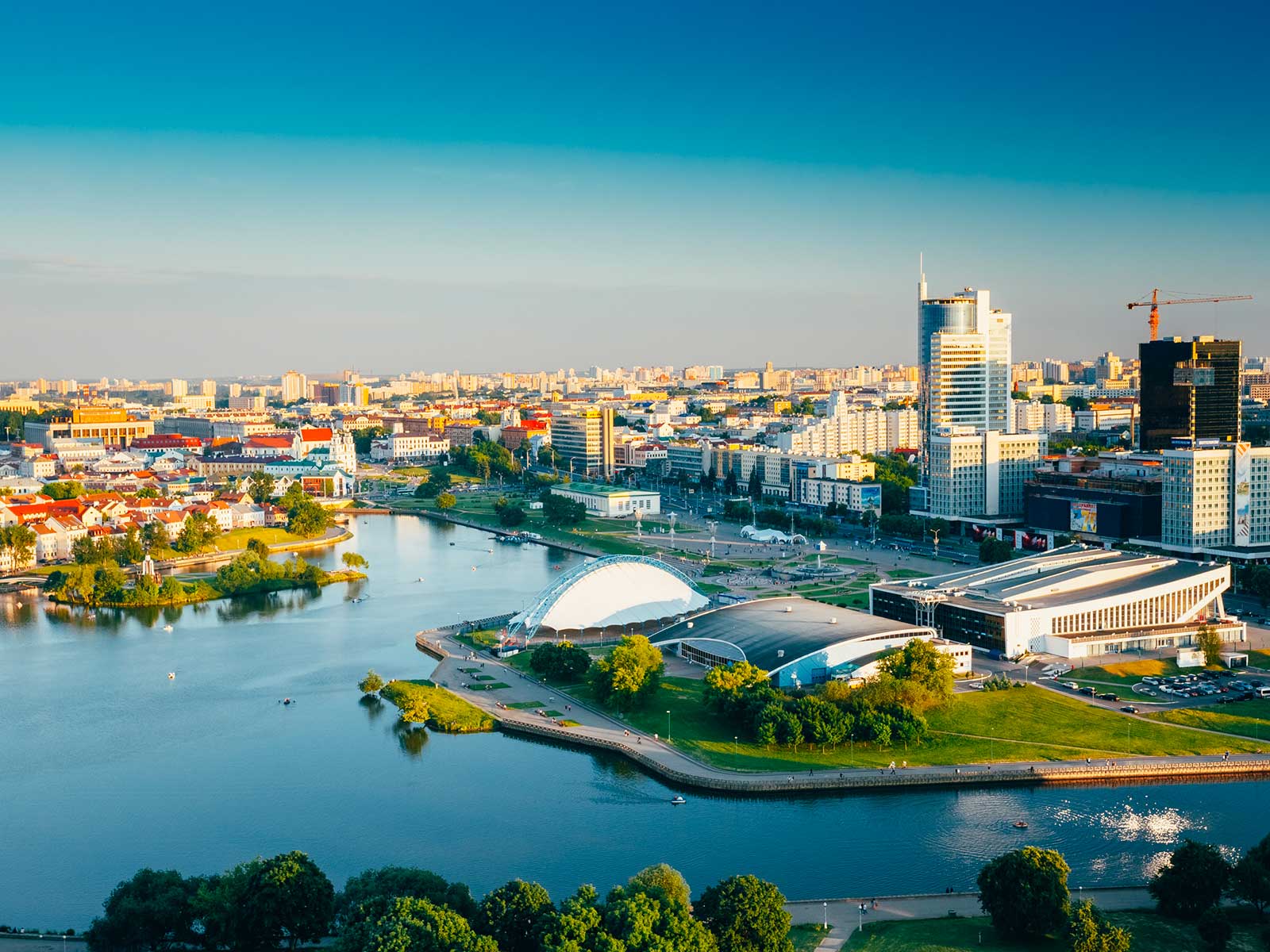
Today, Belarus is a sovereign nation that continues to navigate its unique geopolitical position while striving to preserve its rich cultural heritage. Visitors to the country can explore the historical architecture of Upper City Minsk, discover ancient traditions, and witness the enduring spirit of its people.
Experiencing Belarus's History Today
For visitors, Belarus offers numerous opportunities to delve into its past. From medieval castles like Nesvizh Castle to the poignant memorials of World War II, the country's history is tangible. Exploring the ancient forests of Belovezhskaya Pushcha National Park, a UNESCO World Heritage site and one of Europe's last primeval forests, connects you to a truly ancient past, predating recorded history.
Engaging with Belarusian history means understanding its resilience, its capacity for rebuilding, and its steadfast commitment to memory. Whether you are interested in medieval grandeur, the tragedies of modern warfare, or the enduring spirit of a nation, Belarus offers a compelling journey through time.