A Brief History of Angola: Key Events & Landmarks
Angola, a nation rich in natural beauty and cultural heritage, boasts a history as vibrant and complex as its landscapes. From powerful ancient kingdoms to a hard-won independence and ongoing reconstruction, understanding its past is key to appreciating its present and future. This article offers a concise journey through Angola's pivotal historical moments and iconic sites.
Ancient Roots: Pre-Colonial Kingdoms
Long before European arrival, Angola was home to sophisticated societies and powerful kingdoms. Early inhabitants, including various Bantu-speaking groups, established thriving communities across the region. By the 14th century, the Kingdom of Kongo emerged as one of the most influential, extending its reach across parts of modern-day Angola, Congo, and the Democratic Republic of Congo. Renowned for its advanced political structure, extensive trade networks, and skilled artisans, Kongo was a formidable power. Further south, the Kingdoms of Ndongo and Lunda also flourished, engaging in trade and developing unique cultural identities. These kingdoms were characterized by their intricate social hierarchies, rich oral traditions, and mastery of agriculture and metallurgy, laying the foundational cultural tapestry that continues to influence Angolan identity today.
The Arrival of Europeans & The Slave Trade
The year 1483 marked a turning point with the arrival of the Portuguese explorer Diogo Cão at the mouth of the Congo River. This encounter initiated a period of intense interaction, initially involving diplomatic and trade relations with the Kingdom of Kongo. However, these interactions soon devolved into the devastating transatlantic slave trade. In 1575, the Portuguese founded Luanda, which became a crucial port for the shipment of enslaved Africans to Brazil and the Americas. Throughout the following centuries, millions of Angolans were forcibly removed from their homes, profoundly impacting the region's demography, economy, and social fabric. The construction of fortifications like the
Fortaleza de São Miguel in Luanda stands as a stark reminder of this brutal era, originally built to defend the city and its slave trade operations. The town of Benguela, founded in 1617, also became a significant hub for this tragic commerce.
Did you know? The Fortaleza de São Miguel, a UNESCO World Heritage site nominee, offers panoramic views of Luanda Bay and houses the Museum of the Armed Forces, providing a glimpse into Angola's military history.
Colonial Rule and Resistance
Despite their early presence, Portuguese colonial rule was not fully consolidated across Angola until the late 19th and early 20th centuries, following the "Scramble for Africa." This period saw fierce resistance from indigenous populations. One of the most legendary figures of this era was Queen Nzinga Mbande of Ndongo and Matamba, who courageously led her people in a decades-long struggle against Portuguese encroachment in the 17th century, employing diplomatic skill and military prowess. Under colonial rule, Angola was exploited for its natural resources, including diamonds, coffee, and iron ore. Infrastructure, such as railways and ports, was developed primarily to facilitate the extraction and export of these resources to Portugal. While some cities grew and modern amenities were introduced, the vast majority of Angolans faced systemic discrimination, forced labor, and limited access to education and healthcare.
The Fight for Independence
The mid-20th century witnessed a global wave of decolonization, and Angola was no exception. Nationalist movements began to emerge, advocating for self-determination. Three main groups rose to prominence: the Popular Movement for the Liberation of Angola (MPLA), supported by the Soviet Union and Cuba; the National Front for the Liberation of Angola (FNLA), backed by the USA and Zaire; and the National Union for the Total Independence of Angola (UNITA), initially supported by China and later by the USA and South Africa. These movements engaged in a protracted armed struggle against Portuguese rule, which intensified significantly in the 1960s. The Carnation Revolution in Portugal in 1974, which overthrew the authoritarian Estado Novo regime, paved the way for Angola's independence. On November 11, 1975, Angola officially gained its independence, with Agostinho Neto of the MPLA becoming its first president. The
Memorial Agostinho Neto in Luanda stands as a towering tribute to his legacy and the nation's fight for freedom.
The Angolan Civil War (1975-2002)
Tragically, independence did not bring peace. Deep ideological divisions, Cold War rivalries, and the scramble for Angola's vast oil and mineral wealth plunged the country into one of Africa's longest and most devastating civil wars. The MPLA, FNLA, and UNITA, unable to form a coalition government, continued their armed struggle, supported by various international powers. The civil war lasted for nearly three decades, causing immense suffering, displacing millions, and decimating infrastructure. It ended in 2002 with the death of UNITA leader Jonas Savimbi and the subsequent signing of a peace accord. The war's legacy remains a significant part of Angola's recent history, influencing its social structure, economic development, and national identity.
Modern Angola: Rebuilding and Renewal
Since the end of the civil war, Angola has embarked on a journey of reconstruction and economic growth. Fueled by its rich oil reserves, particularly offshore, the country has seen significant development in its infrastructure, including roads, bridges, and housing. Luanda, the capital, has transformed into a bustling modern metropolis, reflecting the nation's aspirations for progress. Despite challenges such as economic diversification and social inequality, Angola is steadily working towards a more stable and prosperous future. The government is investing in sectors like agriculture, tourism, and renewable energy to reduce its reliance on oil. The resilience of the Angolan people, who have endured so much, is a testament to the nation's enduring spirit.
Iconic Landmarks & Historical Sites to Explore
Angola's history is etched into its diverse landscapes and structures, offering compelling sites for visitors.
- Fortaleza de São Miguel(Luanda):A 16th-century Portuguese fortress offering insights into the colonial and slave trade era, with stunning views of the bay.
- Memorial Agostinho Neto(Luanda):A monumental tribute to Angola's first president, detailing the struggle for independence and the nation's modern history.
- Quedas de Kalandula(Malanje Province):One of Africa's largest waterfalls by volume, these majestic falls have been a significant natural landmark throughout history, inspiring local legends and providing a powerful connection to nature.
- Pedras Negras(Malanje Province):Also known as the Black Rocks of Pungo Andongo, these colossal, uniquely shaped rock formations are steeped in local folklore and historical significance, believed to be the birthplace of King Ngola Kiluanji.
- Tundavala gap(Huíla Province):A breathtaking geological formation near Lubango, offering dramatic cliff-edge views and a sense of timeless natural grandeur.
- Viewpoint of the Moon(Bengo Province):A surreal landscape of eroded cliffs and ravines sculpted by wind and rain, resembling a lunar surface, just south of Luanda.
- Parque Nacional do Quicama(Bengo Province):Angola's only functioning national park, a testament to post-conflict conservation efforts, offering wildlife viewing and a glimpse into Angola's natural heritage.
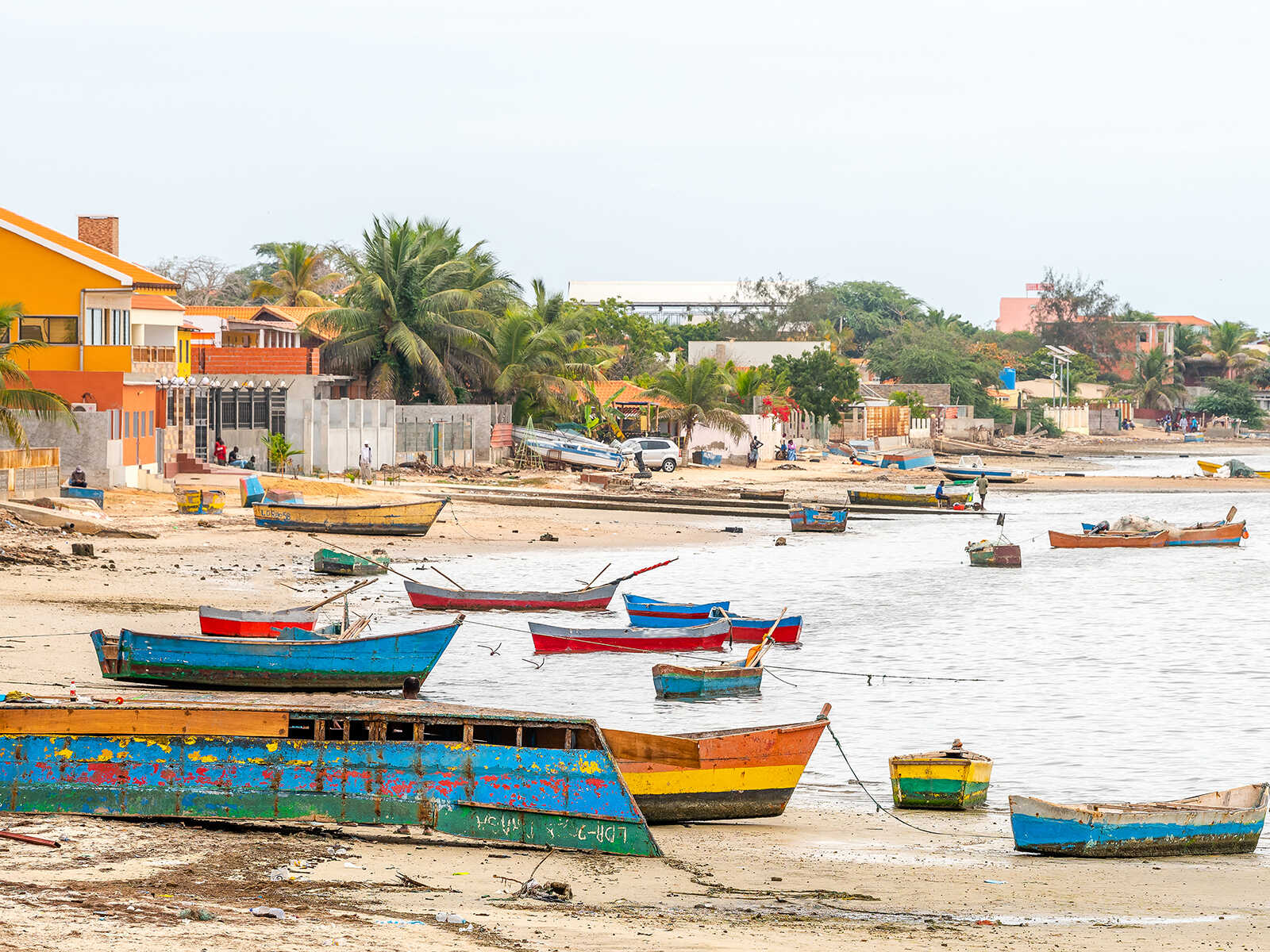
- Sangano Beach(Bengo Province):A beautiful stretch of coastline near Luanda, where local communities have thrived for centuries, offering a tranquil escape and a taste of Angolan coastal life.
Angola's journey has been one of profound challenges and remarkable resilience. Its history, marked by powerful kingdoms, colonial oppression, a bitter civil war, and a dynamic rebuilding process, offers a compelling narrative. Exploring its historical landmarks and natural wonders provides a deeper understanding of this captivating African nation and its promising future.