
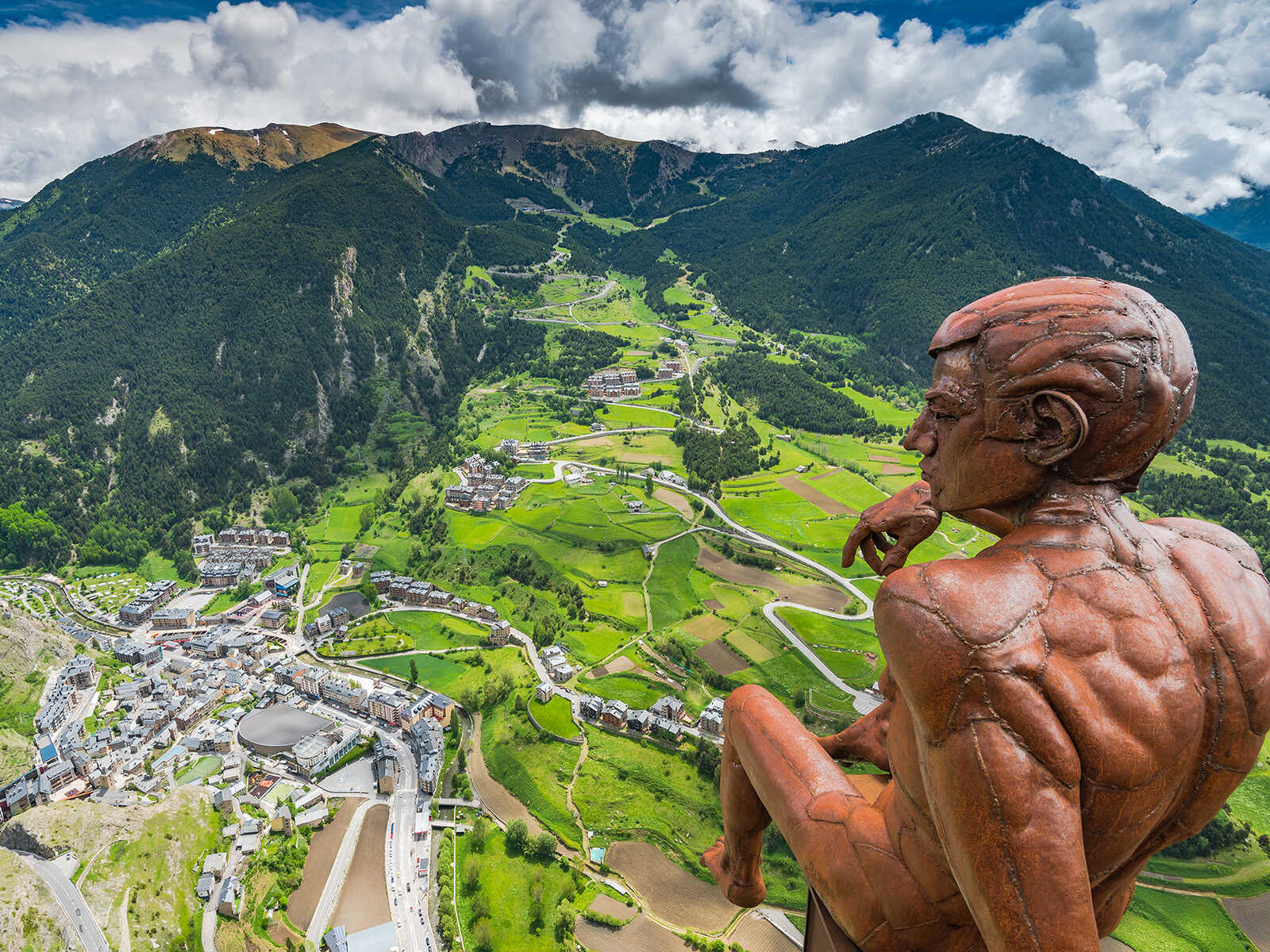
The Nobility of Time (Dalí Sculpture) in Andorra: Art & Culture Guide
In the bustling heart of Andorra la Vella stands a profound testament to artistic genius and philosophical inquiry: Salvador Dalí's iconic sculpture,The Nobility of Time. This monumental artwork serves not only as a striking visual landmark but also as a powerful invitation to contemplate the ephemeral nature of existence and the enduring legacy of human creativity.
A Masterpiece in the Heart of Andorra la Vella
Nestled in Plaça de la Rotonda, one of Andorra la Vella’s most vibrant public squares,The Nobility of Timecaptivates passersby with its surreal grandeur. The bronze sculpture, a recurring motif in Dalí's oeuvre, features a melting clock draped over a tree trunk, crowned by an intricate design. It's a piece that instantly draws the eye, inviting contemplation even amidst the surrounding urban energy.
This magnificent work arrived in Andorra in 1999, a gift from the Dalí Universe collection to the Andorran people, solidifying its place as a cornerstone of the principality's cultural landscape. Its prominent location ensures that both locals and visitors can easily engage with this global artistic treasure, making it a must-see stop on any Andorran itinerary.
Decoding Dalí's Vision: Symbolism of The Nobility of Time
Salvador Dalí, the undisputed master of Surrealism, was renowned for infusing his works with layers of complex symbolism.The Nobility of Timeis no exception, offering a rich tapestry of meaning that continues to fascinate art enthusiasts worldwide.
The Melting Clock
Perhaps the most recognizable element, the melting clock famously echoes Dalí's 1931 painting,The Persistence of Memory. It symbolizes the fluidity and relativity of time, challenging our conventional, rigid understanding of chronology. For Dalí, time was not a fixed constant but a pliable entity, capable of warping and flowing, much like the subconscious mind it often inhabits.
The Crown
Perched atop the melting clock, the crown represents nobility, royalty, and sovereignty. In the context of time, it suggests that time itself holds a regal and authoritative power over human existence. It can also signify the spiritual authority and timeless wisdom associated with profound understanding, elevating time beyond a mere measurement to a noble, governing force.
The Tree Trunk
The gnarled tree trunk from which the clock appears to emerge signifies nature, life, and the organic growth of time. Trees are often symbols of enduring life and rootedness, contrasting with the fleeting nature suggested by the melting clock. This juxtaposition highlights the cyclical nature of existence and the timelessness of the natural world.
Dalí's Obsession with Time
Dalí's fascination with time was deeply intertwined with his exploration of dreams, the subconscious, and the theories of relativity. He was captivated by the idea that time could be perceived differently, not just as a linear progression. This sculpture, therefore, is a profound meditation on how we experience, measure, and ultimately, are governed by time.
Dalí once stated, "The only difference between a madman and me is that I am not mad." His unique perspective allowed him to portray familiar concepts, like time, in ways that challenged perception and opened doors to new interpretations.
Salvador Dalí and Andorra: A Unique Connection
While Salvador Dalí himself was deeply rooted in Catalonia, his artistic legacy has found a significant home in Andorra. The principality, with its majestic mountains and timeless charm, provides a fitting backdrop for a sculpture that speaks to the grandeur and enduring mystery of existence. The presence ofThe Nobility of Timereflects Andorra's commitment to cultural enrichment and its role as a custodian of international art.
The sculpture in Andorra la Vella is part of a global collection of Dalí's monumental works, many of which are overseen by the Dalí Universe. These pieces, often large-scale bronze editions of his most famous motifs, bring the surrealist master's vision to public spaces worldwide, allowing a broader audience to engage with his imaginative world.
Visiting The Nobility of Time: Practical Information
VisitingThe Nobility of Timeis an effortless experience, perfectly integrated into a day of exploring Andorra la Vella.
Location and Accessibility
The sculpture is prominently displayed in Plaça de la Rotonda, a central plaza in the capital. It's easily reachable on foot from most points in Andorra la Vella, including the main shopping avenues and hotels. The plaza itself is a lively spot, often bustling with people and surrounded by shops and cafes, making it a natural gathering point.
Best Time to Visit
The sculpture can be admired at any time of day or night. During the day, the natural light brings out the intricate details of the bronze. In the evening, strategic lighting illuminates the artwork, giving it a dramatic and ethereal quality. Consider visiting during different seasons; the backdrop shifts from vibrant summer greens to the crisp air of autumn, or even snow-dusted winter scenery, each offering a unique perspective.
Combining Your Visit
Given its central location,The Nobility of Timeis an excellent starting point for further exploration. After appreciating the artwork, you can easily:
- Stroll through Andorra la Vella's tax-free shopping districts.
- Explore the historic quarter, including the Casa de la Vall, Andorra's historic parliament building.
- Indulge in some relaxation at Caldea, Europe's largest mountain spa, just a short walk away.
- Venture slightly further to discover charming Romanesque churches like those in La Cortinada.
- Consider a scenic drive or hike in the nearby Madriu-Perafita-Claror Valley, a UNESCO World Heritage site, to contrast the urban art with Andorra's stunning natural landscapes.
For a deeper dive into the sculpture's history and significance, you might find more dedicated information on our page for The Nobility of Time.
Beyond the Sculpture: Art and Culture in Andorra
While Dalí's masterpiece is a highlight, Andorra offers a rich tapestry of artistic and cultural experiences. The principality actively promotes public art, with various sculptures and installations dotted throughout its towns and villages. Beyond the visual arts, Andorra preserves its unique cultural heritage through its Romanesque churches, traditional festivals, and museums.
For those seeking a blend of nature and culture, the Parc Natural de la Vall de Sorteny offers breathtaking landscapes where you can hike and discover the local flora and fauna, a stark contrast to the urban art scene. Families might enjoy a day at Naturlandia, an adventure park that combines nature, sport, and fun, showcasing another facet of Andorra's diverse offerings. Even the lively ski resort town of Pas de la Casa, known for its winter sports and shopping, contributes to the vibrant cultural mosaic through its unique atmosphere and events.
Preserving a Legacy
The presence ofThe Nobility of Timein Andorra la Vella is more than just an exhibition; it's a testament to Andorra's dedication to preserving and showcasing world-class art. This sculpture not only enriches the urban environment but also serves as an educational tool, inspiring dialogue about art, philosophy, and the passage of time. Regular maintenance and careful curation ensure that this invaluable piece remains a source of inspiration for generations to come.
The Nobility of Timestands as a powerful symbol of Andorra's cultural ambition and its position as a destination where natural beauty meets artistic brilliance. It is a must-see for anyone visiting the principality, offering a moment of profound reflection amidst the charm of the Pyrenees.