
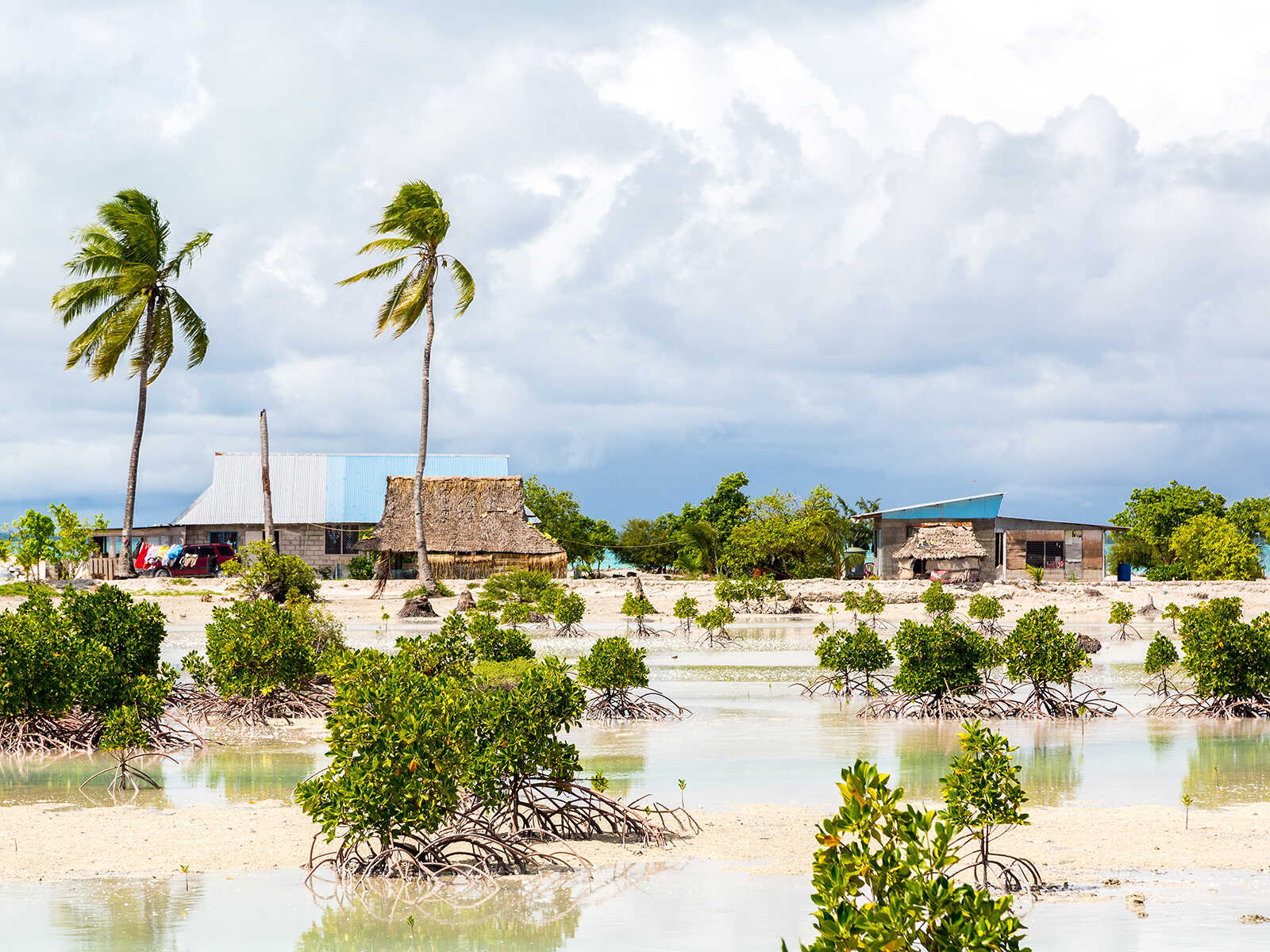
Kiribati Language Guide: Essential Phrases for Your Trip
Venturing to the remote and beautiful islands of Kiribati offers an unparalleled experience, and connecting with its vibrant culture begins with a simple 'Mauri'. Learning a few essential phrases in Gilbertese, also known as Te taetae ni Kiribati, will not only enrich your journey but also show deep respect for the local community. This guide provides practical phrases and pronunciation tips to help you communicate effectively and make lasting connections during your visit.
Why Learn Gilbertese for Your Kiribati Adventure?
Imagine stepping onto the shores of Tarawa, the vast atoll of Kiritimati, or the remote beauty of Tabuaeran, greeted by warm smiles. While many I-Kiribati, especially in tourist-frequented areas, speak some English, making an effort to speak their native tongue is a gesture deeply appreciated. It bridges cultural gaps, opens doors to more authentic interactions, and transforms your trip from a mere visit into a genuine cultural immersion. From navigating local markets to sharing a laugh with a newfound friend, even a few words can make all the difference and leave a lasting positive impression.
Understanding Gilbertese: Te taetae ni Kiribati
Gilbertese, or Te taetae ni Kiribati, is a Micronesian language spoken by the I-Kiribati people across their 33 atolls. It's a fascinating language with a relatively straightforward phonetic system once you grasp a few key sounds. Unlike many languages with complex tonal variations or silent letters, Gilbertese is largely phonetic, meaning words are pronounced very much as they are spelled. This characteristic makes it quite accessible for beginners, allowing you to quickly gain confidence in speaking.
Pronunciation Guide: Mastering the Sounds
The Gilbertese alphabet has 13 letters: A, B, E, I, K, M, N, NG, O, R, T, U, W. Note the absence of C, D, F, G, H, J, L, P, Q, S, V, X, Y, Z. The key to good pronunciation lies in understanding these basic sounds, particularly the vowels and a few unique consonants:
- Vowels:Similar to Spanish or Italian vowels, they are always pronounced clearly and distinctly.
- Aas in 'father'
- Eas in 'bed'
- Ias in 'machine'
- Oas in 'go'
- Uas in 'flute'
- Consonants:Most are familiar, but some require attention to get just right.
- B:Often sounds like a soft 'p' when at the end of a word or before another consonant, otherwise like 'b'. For example, 'tabo' (place) sounds closer to 'tapo'.
- K:Like 'k' in 'kite'.
- M:Like 'm' in 'mat'.
- N:Like 'n' in 'net'.
- NG:This is a crucial and unique sound, like the 'ng' in 'sing'. It's a single nasal sound, not 'n' then 'g'.Example: 'te tanga' (a dollar)
- R:A soft 'r', often a flap similar to the 'tt' in American English 'butter' or the 'r' in Spanish 'pero'.
- T:Before 'i' or 'u', it often takes on a 's' or 'ch' sound. This is a common point of confusion for English speakers.
- Ti:Sounds like 'si' in 'sing' or 'chi' in 'chip'.Example: 'Kiribati' is pronounced closer to 'Kiri-bas' or 'Kiri-batch'.
- Tu:Sounds like 'su' or 'chu'.
- W:Like 'w' in 'water'.
Stress usually falls on the second-to-last syllable in most words, though there are exceptions. Don't worry about achieving perfect pronunciation initially; youreffortis what truly counts and will be greatly appreciated by the locals.
Essential Kiribati Phrases for Travelers
Greetings & Basic Politeness
These are the foundational phrases that will open many doors and warm many hearts.
- Mauri(Mao-ree): Hello / Welcome (The most important word to learn and use frequently!)
- Ko rabwa(Koh rah-bwa): Thank you
- Ko raba ni bati(Koh rah-bwa nee bah-tee): Thank you very much
- Ngaia / Eng(Ngai-ah / Eng): Yes
- Bata(Bah-tah): No
- Kam na mauri(Kahm nah mao-ree): Hello (to more than one person)
- Uara?(Oo-ah-rah?): How are you?
- I marurung(Ee mah-roo-roong): I am fine
- Kabara rau(Kah-bah-rah rao): Excuse me / Sorry
Getting Around & Asking for Directions
Navigating the islands can be an adventure. These phrases will help you find your way.
- Taoia?(Tao-ee-ah?): Where?
- Taai?(Tai?): What?
- Anaki au?(Ah-nah-kee ah-oo?): Where is the...?
- Kaonako(Ka-oh-nah-koh): Let's go / Go
- Te kawai(Teh ka-wai): The road / Path
- Taara(Tah-rah): Here
- Ni irianau(Nee ee-ree-ah-nao): Follow me
- Te boti(Teh boh-tee): Boat
- Te wae(Teh wae): Foot / By foot
A local's directions might involve pointing towards the sun, a prominent landmark, or a specific tree rather than cardinal directions. Be patient, observe their gestures, and don't hesitate to ask for clarification if needed.
Shopping & Numbers
Whether you're exploring the bustling markets of Tarawa for fresh produce or looking for unique handicrafts, knowing numbers and a few shopping phrases will be incredibly helpful.
- Abon te?(Ah-bohn teh?): How much? (for an item)
- Te tanga(Teh tah-ngah): A dollar
- Tiaki tanga(Tee-ah-kee tah-ngah): Not a dollar (or, "it's not one dollar")
- Teutana(Teh-oo-tah-nah): A little bit
- Bati(Bah-tee): Many / Much
- I tangiria(Ee tah-ngee-ree-ah): I want / I like it
Basic Numbers
Counting in Gilbertese is quite regular, making it easy to learn the basics.
- Teuana(Teh-oo-ah-nah): One
- Uoua(Oo-oh-oo-ah): Two
- Tenua(Teh-noo-ah): Three
- Aua(Ah-oo-ah): Four
- Nimaua(Nee-mah-oo-ah): Five
- Onoua(Oh-noh-oo-ah): Six
- Itua(Ee-too-ah): Seven
- Wauua(Wah-oo-oo-ah): Eight
- Ruaiwa(Roo-ai-wah): Nine
- Tenaongo(Teh-nah-oh-ngoh): Ten
Food & Drink
Enjoying local cuisine is a highlight of any trip to Kiribati, from fresh seafood to traditional root crops and, of course, countless coconuts.
- Te kai(Teh kai): Food
- Te ran(Teh rahn): Water
- Te ika(Teh ee-kah): Fish
- Te ni(Teh nee): Coconut
- Bon te baka(Bohn teh bah-kah): It's delicious!
- Tia buti(Tee-ah boo-tee): I'm full
- I tangiria te ran(Ee tah-ngee-ree-ah teh rahn): I want water
Common Questions & Answers
Engage in simple conversations with these fundamental questions and responses.
- Antai aram?(Ahn-tai ah-rahm?): What is your name?
- Arana Bon [Your Name](Ah-rah-nah Bohn [Your Name]): My name is [Your Name]
- E aera?(Eh ah-eh-rah?): Why? / What's wrong?
- Ko nako n tei?(Koh nah-koh n teh-ee?): Where are you going?
- I nako n te taabo(Ee nah-koh n teh tah-boh): I am going to the place (a general, polite response)
- Ko na roko n tei?(Koh nah roh-koh n teh-ee?): Where do you come from?
- I roko man [Country](Ee roh-koh mahn [Country]): I come from [Country]
- E raoiroi(Eh ra-oi-roi): It is good / Okay
Farewells
Ending an interaction respectfully is just as important as starting one.
- Ti a bo(Tee ah boh): Goodbye / See you (the most common and versatile farewell)
- Ti a reke(Tee ah reh-keh): See you again (more formal or expresses a hope to meet again)
- Bon te raoi(Bohn teh ra-oi): Farewell / Peace be with you (used in more formal or profound partings)
Cultural Nuances: Beyond the Words
Speaking Gilbertese is just one aspect of respectful interaction. Understanding the local customs will further enhance your experience and demonstrate genuine appreciation for the I-Kiribati way of life:
- The Smile:A warm smile often accompanies 'Mauri' and is universally understood as a sign of friendliness and openness.
- Politeness and Patience:Life in Kiribati operates at a different pace, often referred to as "island time." Patience is a virtue, and politeness is paramount. Avoid direct confrontation, raising your voice, or showing frustration, as this can be seen as highly disrespectful.
- Respect for Elders:Show deference to elders in all interactions. It's customary to lower your head slightly, offer a soft 'Mauri', or offer assistance.
- Giving and Receiving:When offered something, especially food or a gift, it's polite to accept with both hands, particularly if it's from an elder or host.
- Dress Code:While not directly language-related, dressing modestly, especially outside of resort areas, shows great respect. For example, when visiting the Parliament Building or local churches in Tarawa, appropriate attire (shoulders and knees covered) is expected.
Did you know that Kiribati is the only country in the world that lies in all four hemispheres? This unique geographical position means its culture is a fascinating blend of traditions shaped by ocean and sky, with a deep connection to their environment.
Even if your pronunciation isn't perfect, the effort you make will be deeply appreciated. The I-Kiribati people are known for their genuine hospitality, and attempting their language is a direct path to their hearts. Don't be afraid to make mistakes; they often lead to shared laughter and memorable moments that truly define your travel experience.
Embrace the Language, Embrace Kiribati
Your trip to Kiribati is an opportunity to explore some of the world's most remote and untouched islands, from the vast expanses of Kiritimati, famous for its fishing, to the intriguing historical significance of Nikumaroro island. Learning a few phrases in Gilbertese is more than just a linguistic exercise; it's an act of cultural engagement. It signals your openness, respect, and desire to connect on a deeper level with the people and their way of life. So, arm yourself with a 'Mauri' and 'Ko rabwa', and prepare for an unforgettable journey where every word you speak builds a bridge to the heart of Kiribati.