
Getting Around Hungary: MÁV Trains & Budapest Metro
Hungary, a landlocked gem in Central Europe, invites exploration from its bustling capital to its serene countryside. Navigating this beautiful country is made remarkably easy thanks to its efficient and extensive public transportation network, primarily spearheaded by MÁV trains and the Budapest Metro.
Why Choose Public Transport in Hungary?
Opting for Hungary's public transport system is not just a practical choice; it's an immersive experience. It offers a cost-effective and environmentally friendly way to travel, allowing you to soak in the local atmosphere and admire the changing landscapes without the stress of driving or parking. From intercity rail adventures to zipping across Budapest's urban core, you'll find convenience at every turn.
MÁV Trains: Exploring Beyond Budapest
Hungary's national railway company, MÁV (Magyar Államvasutak), operates a comprehensive network connecting Budapest to virtually every major town and city across the country. It's the backbone of intercity travel, offering a comfortable and reliable way to discover Hungary's diverse regions.
Types of MÁV Trains
- InterCity (IC) Trains:These are the fastest and most comfortable trains, connecting major cities with fewer stops. A reservation is often mandatory or highly recommended for IC services, ensuring you have a seat.
- Express Trains:Slightly slower than IC trains, express services still offer good speed and connect important regional centers.
- Regional (Személyvonat) Trains:These local trains stop at almost every station, ideal for shorter journeys or reaching smaller towns. They offer a glimpse into local life and are generally the most affordable option.
Buying MÁV Train Tickets
Purchasing train tickets is straightforward. You can buy them:
- Online:The MÁV website is available in English and allows you to book tickets in advance, often offering discounts for early purchases. It's particularly convenient for InterCity routes.
- At Stations:Major train stations, especially in Budapest (Keleti, Nyugati, and Déli pályaudvarok), have ticket counters and automated machines. Staff at larger stations usually speak English.
Always ensure you have a valid ticket before boarding your train. For InterCity services, ensure your ticket includes a seat reservation.
Popular Destinations by Train
MÁV trains open up a world of Hungarian exploration. Here are just a few destinations easily reachable by rail:
- Lake Balaton:Hungary's "Hungarian Sea" is easily accessible, with numerous towns along its shores, like Siófok or Keszthely, having train stations. Enjoy the beaches, wineries, and vibrant summer atmosphere. From Keszthely, you can also easily reach Lake Hévíz by a short bus ride.
- The Danube Bend:While Szentendre is best reached by HÉV, other towns like Esztergom, with its magnificent Basilica, and Visegrád (for the Royal Palace of Matthias Corvinus, requiring a bus connection from Nagymaros-Visegrád station) are well-served by MÁV.
- Eger:Journey to the historic city of Eger, famous for its castle, thermal baths, and "Bull's Blood" wine, is a scenic train ride away.
- Pécs:Head south to the charming city of Pécs, a UNESCO World Heritage site known for its Roman ruins, Ottoman mosques, and beautiful cathedral.
- Hortobágy:Experience the vast plains of the Hortobágyi National Park, Europe's largest continuous natural grassland, by taking a train to Debrecen and then connecting locally.
- Sopron:In western Hungary, near the Austrian border, lies Sopron, home to the historic Fire Tower and a delightful old town, easily reached by MÁV.
Fun Fact:Keleti pályaudvar (Eastern Railway Station) in Budapest is not only a major transport hub but also a magnificent architectural marvel, opened in 1884. Its grand hall and intricate details are worth admiring even if you're just passing through.
Budapest Metro: Navigating the Capital
Budapest's public transportation system, managed by BKK (Budapesti Közlekedési Központ), is world-class, and its Metro is the crown jewel. With four main lines, it's the fastest and most efficient way to traverse the city, reaching most major attractions and districts.
The Budapest Metro Lines
Budapest boasts a historic and modern metro system:
- M1 (Yellow Line - Millennium Underground):Europe's first underground railway, opened in 1896, runs beneath Andrássy Avenue. It's a UNESCO World Heritage site and a delightful way to explore the city's elegant boulevard.
- M2 (Red Line):Connects Buda and Pest, passing under the Danube. It's crucial for reaching key landmarks.
- M3 (Blue Line):Runs north-south on the Pest side, connecting many residential areas and central transport hubs.
- M4 (Green Line):The newest line, known for its modern stations and driverless trains, connects Kelenföld in Buda with Keleti pályaudvar in Pest.
Tickets and Passes for Budapest Public Transport
Budapest operates a unified ticketing system for its metro, trams, buses, and HÉV suburban railways within the city limits. You must purchase your ticket or passbeforeyour journey and validate it at the entrance to the metro station or on board trams/buses. Inspectors frequently check for valid tickets, and hefty fines can apply for non-compliance.
Various options are available, from single tickets to multi-day travel cards, catering to different durations of stay. These can be bought at metro stations, newspaper kiosks, and BKK customer service centers.
Using the Metro Effectively
- Validation:Always validate your ticket at the orange machines before descending to the metro platforms. For passes, simply show them to staff if present.
- Finding Your Way:Stations are clearly marked with line colors and numbers. Maps are available at stations and online.
- Etiquette:Allow passengers to exit before boarding, and use escalators responsibly (stand on the right, walk on the left).
Key Budapest Attractions by Metro
The Metro is your best friend for sightseeing in Budapest:
- M1 (Yellow Line):Perfect for exploring Hősök tere(Heroes' Square), the Széchenyi Thermal Bath(Széchenyi fürdő station), and the House of Terror museum (Vörösmarty utca station).
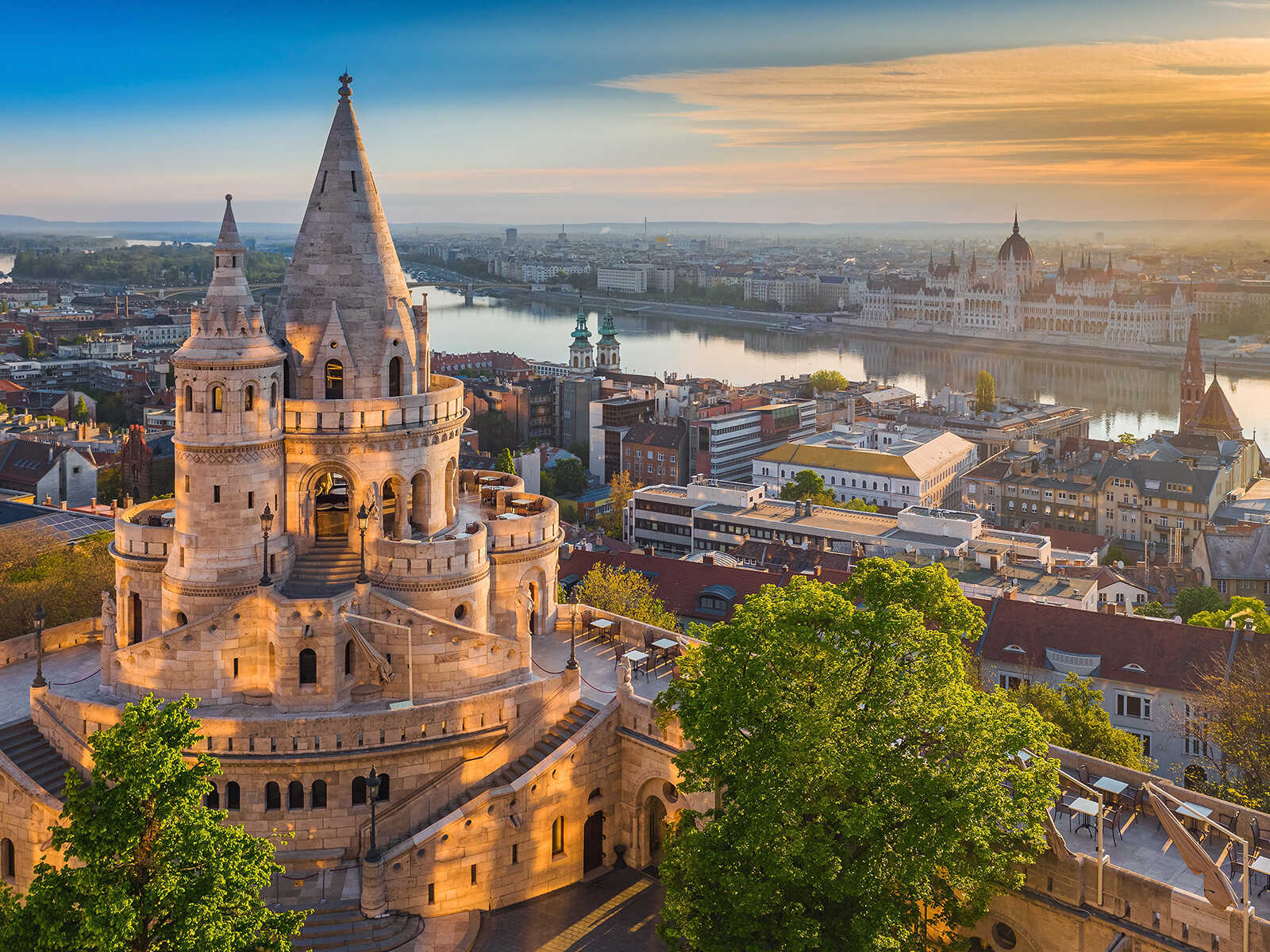
- M2 (Red Line):Get off at Kossuth Lajos tér for the majestic Hungarian Parliament Building. For Buda Castle and the Fishermen’s Bastion, alight at Batthyány tér and connect via bus or a scenic walk/funicular.
- M3 (Blue Line):Connects with several central points, including Ferenciek tere, a short walk from Váci u.(Váci Street), Budapest's famous pedestrian shopping street.
- M4 (Green Line):Connects Keleti pályaudvar (Eastern Railway Station) and Kelenföld. From Kelenföld, you can catch a bus to Memento Park.
While the Metro covers much, some attractions like the Citadella atop Gellért Hill require a bus connection from a metro station.
Other Modes of Transport in Hungary
Beyond MÁV trains and the Budapest Metro, Hungary offers an integrated public transport experience:
- Trams:Especially in Budapest, trams offer a charming and often scenic way to travel. Tram Line 2, running along the Danube embankment, provides unparalleled views of the Parliament, Buda Castle, and Chain Bridge.
- Buses:An extensive bus network fills the gaps where trains and metros don't reach, both within cities and for intercity connections.
- HÉV (Suburban Railway):These green trains connect Budapest with surrounding towns, most notably Szentendre, a popular artists' village in the Danube Bend.
- Taxis & Ride-Sharing:Available in major cities. Always opt for reputable companies or use established ride-sharing apps to ensure fair rates.
General Travel Tips
- Language:While English is widely spoken in tourist areas and by younger generations, learning a few basic Hungarian phrases (e.g., "hello," "thank you," "ticket") can be very helpful and appreciated.
- Apps:Download the BKK Futár app for real-time public transport information in Budapest and the MÁV app for train schedules and tickets.
- Flexibility:Hungary's public transport is generally punctual, but it's always wise to allow extra time, especially if connecting to flights or important appointments.
Hungary's public transport system is a traveler's ally, offering convenience, efficiency, and a genuine way to connect with the country. Whether you're gliding through Budapest's underground or watching the Puszta pass by your train window, you'll find getting around Hungary an integral part of your adventure.